
While Professor Plum has survived and is growing by the day, there have been some garden casualties. One of the black currants had begun leafing out a little early during the April heat wave and when it got cold again a few days later, all of the little buds died. I’ve been hoping that maybe Black Currant would have some energy left to put out some new sprouts, but it’s been a couple weeks now and nothing. I can only conclude that Black Currant has died. There is another black currant in the garden that is doing really well, but I am still mourning the loss.
In the front yard there has been a Red Lake Red Currant growing expansive and happy for years; each year producing a seemingly impossible amount of tart red currants that I would have James turn into a gorgeous red jam. Red Currant has died too, just like Black Currant. I can still see all the little buds on the branches, except now instead of bursting open into green leaves, they are hard little brown dead lumps. I have been hoping Red Currant would somehow revive from the roots, but so far, nothing.
But, there might be some hope. Yesterday I saw a bit of green sticking up from the leaf mulch beneath Red, and I bent over to pull out what I thought was a weed tree sprout. But it appears to be attached to Red! I think it must be one tiny, spindly twig of a branch that had been protected by the leaf mulch and survived. But it is not one of those hardy, upright branches one can hope to sprout a whole new currant from. It is a limp, twiggy little under-shrub sort of branch. I will allow the branch to do their thing and see what happens, but I do not hold out hope that it means Red will survive. I fully expect to bring home a Red Jr. next year from the garden sale.
Speaking of garden sales, everything we planted was doing pretty well. And then squirrels happened. The first casualty was the new hazelnut seedling. I walked over with the watering can a couple days later to see it had been eaten off at the ground! Since the roots were not dug up, I have kept watering and hoping, but after a week of this, I am fairly certain it is dead. I will tend to the tiny roots for another week before writing the death certificate.
The other garden sale casualty is definitely dead. In the middle of the week I was in the front yard watering the pumpkins in the little raised bed—they are doing great!—and the liatris from the sale, and then I was looking for the shooting star to water. Except a squirrel dug up the shooting star and ate all the leaves. I wanted to blame rabbits, but rabbits don’t generally dig up plants. The squirrel was probably coming back to make sure they hadn’t missed eating all the tulip flowers—all but one flower eaten before even having a chance to open!—and spied this new addition, gave the shooting star a taste and found it delectable. Sigh.
Everything else is doing fabulously. The snap peas I planted at the end of April from older seeds are even suddenly coming up! Not all of them, but five out of the sixteen. Not bad, really.

Last weekend we also performed a rescue mission of sorts. For years I have had a gooseberry in the front yard in a filtered shade/late afternoon sunny spot beneath Silver Maple. This was my first permaculture “I’m going to make a Maple Tree Guild adventure.” Except I violated one of the main tenants of permaculture right from the start: observe. When I planted Gooseberry and had to hack away some maple tree roots, I completely ignored what this actually meant: no room for Gooseberry to send down roots.
To Gooseberry’s credit, they have survived years in this root-bound location. Not thriving, just surviving. Last year I noticed that surviving was also beginning to be a problem. This year, with only about a quarter of their branches budding, I was going to chop them down and repent for my stupid mistake. But before chopping, I decided it would be completely unfair to Gooseberry who, clearly, is a tough little shrub. So I dug them up and moved them to a more hospitable location in the main back yard garden.
And you know what? Gooseberry is so happy in their new location they managed to produce flowers on one of their branches! There are two other gooseberries nearby, so perhaps their company was also encouraging. I have apologized profusely for my neglect and cruelty, and I visit Gooseberry almost daily to provide a drink of water and to coo over them, trying to make amends. Gooseberry’s flowers tell me I have been forgiven. I can only hope that when my turn comes to forgive some large wrong that I will be able to do so with as much grace as Gooseberry.

James and I have been eating greens from the garden almost everyday and it is wonderful: arugula, garden sorrel, curly dock, sometimes violet leaves, green onions, garlic and onion chives, even oregano for spice already. The stinging nettles are big enough to pick from too, and one evening James sautéd a big handful I carefully clipped while wearing gloves—though I was wearing shorts and brushed up against them a couple times. I couldn’t figure out why my knees felt kind of itchy/stingy until I looked down as I was bending over to cut more leaves and saw nettle leaves brushing against my knees. Oh. Ha!
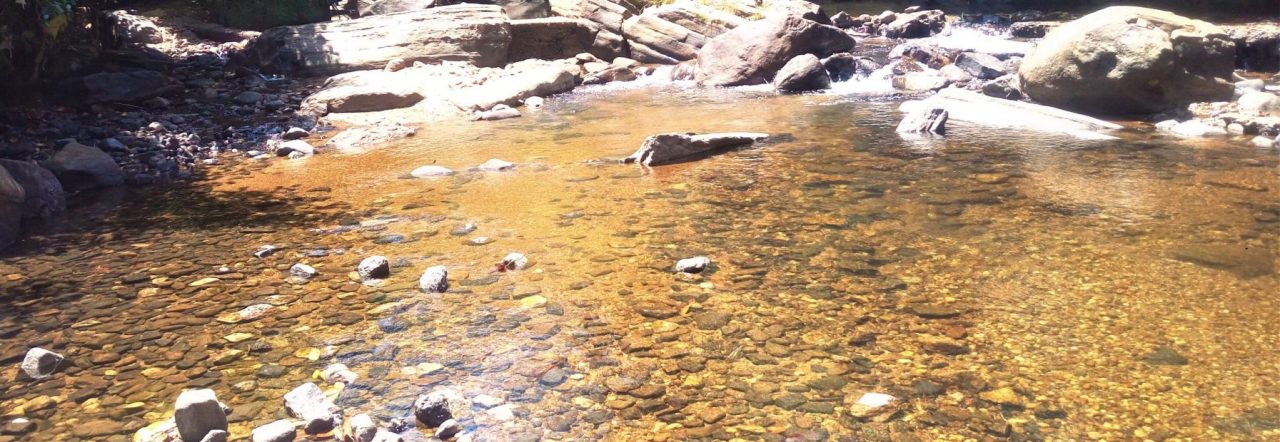
I used to be terrified of the nettle stings because once, when I was a kid and the family was having a long weekend camp in the mountains an hour away from our house, my sister and I were playing by a little creek that ran next to our campsite. We were building tiny dams and all the things kids do, when I stumbled into a clump of bushes and came out with burning arms and legs. I felt like I was being eaten by biting ants but there were no ants. I started crying and ran to my mom. She investigated the bushes and said they were stinging nettles. She wetted a washcloth with cold water and wiped it over the stinging places. It helped a little, but it was uncomfortable for a good long while.
As a grown up, I don’t go stumbling into my garden nettle patch, I am careful. But I am not infrequently stung. Now it is only a minor irritation, and, I have read, may even be good for me as an anti-inflammatory remedy for things like arthritis (which I don’t have, but maybe stings are preventative too?). However, I prefer to take my nettles orally as food or tea. What causes nettles to sting are the tiny hairs on the plant. When you steep fresh leaves in hot water, cook, or puree them in a blender or food processor, the little hairs lose their sting and they are perfectly safe to eat.

Nettle tea with a little mint or lemon to balance out the flavor, is a most excellent allergy relief medicine—truly, if you suffer from seasonal allergies nettle leaf tea will bring almost instant relief. Nettles are high in antioxidants, calcium, iron, magnesium, potassium, and iron. Nettles make a delicious pesto. They are also tasty sautéd with onion and garlic, and work marvelously as a side dish or on a sandwich. We chose the sauté on a tofu sandwich route this last week. James added a bit of smoky salt and, oh, were they delicious! I’m hoping to get James to use some to make a creamy pasta sauce for dinner later in the week. Yum!
Tuesday evening James and I biked over to the lake near our house and picked a quart-sized jar of dandelion flower petals. James turned the flower petals into jelly. This is the third year we’ve made dandelion jelly and James managed the best results yet. The jelly set perfectly and tastes lovely, a subtle honey-like flavor with a bright note from the lemon juice. I’ve had some on toast and pancakes. There are a couple small jars in the freezer, and one is marked “Imbolc” so we make sure it gets save for February next year when we most need a taste of spring.
We finished planting all the garden vegetable indoor seed starts and direct sow seeds this weekend. For a few weeks more there will only be greens, but then, I hope I will be able to begin pulling up some radishes and perhaps be able to add mustard greens to the mix as well.
Oh y’all, in spite of the garden casualties, I am so very much in my happy place right now!
Reading
- Article: End of the World by Dougald Hine. “End of the world as we know it is not the end of the world; it is the end of a way of knowing the world.”
- Article: Reconnect with Beans—Take Our Food Power Back by Xavier Harmon This is a lovely little article about the importance of beans in cultures around the world. And I learned about the Global Bean Network, signed up for their newsletter, and have been having fun exploring their articles and geeking out over beans. I love beans! I love to eat them and I love to grow them in the garden. Legumes have got to be some of the prettiest seeds on the planet. This year I have planted ten different kinds of legumes in the garden and next year I plan to figure out how to fit in even more.
- Book: Survival of the Richest: Escape Fantasies of the Tech Billionaires by Douglas Rushkoff. Rushkoff makes it clear that the billionaires planning their escape to Mars, or New Zealand bunkers, private island, or floating ocean cities is all about these men escaping the hellscape that they are very conscious of having created. So their goal is to make as much money as possible, build their escape, escape as everything falls apart, and sit sealed off from the world while we all fight over the scraps that are left. It’s a funny and horrifying read.
Listening
- Podcast: Missing Witches Rx: Tanya Tagaq, Kool & The Gang, The Cranberries, Florence. A meditation on daffodils: “One part of the daffodil is above ground, drinking sky, shining yellow with the optimism of Spring, but the other part is below. A perennial that lets parts of itself die, decides what to shed, moves water out of its cells, and keeps its sweetness close to survive through winter times.” Plus encouragement to dance, especially if you aren’t a good dancer.
- Podcast: Team Human: Tyson Yunkaporta. This episode is from March, 2021. Yunkaporta reminds us that as long as there have been humans, civilizations grow and collapse and ours is no different.
Watching
- Series: The Power. This is based on the book by Naomi Alderman, which I enjoyed. She is one of the writers for the series. I’ve only seen the first episode, and so far, it’s pretty good.
Quote
At the time of writing, I have so far managed not to buy a grain grinder, because this household essential is available only in solid beech and ceramic, for £335, postage not included, but my desire to eat bread made from wheat I have grown myself–I’d give up a square foot of garden for it, maybe even two–is unabated.
Rhapsody in Green by Charlotte Mendelson, page162

You need a non-bothering-chicken-friendly dog that would chase away rabbits and squirrels. It must be so frustrating to have a plant you were looking forward to nurturing suddenly disappear in a few nibbles. I hope the gooseberry thrives in its new home! Never had nettle stings (maybe I should!), just plain-old poison ivy, but enjoy nettle tea and the pesto sounds like a wonderful idea. That piece by Dougald Hine is really thought-provoking. Enjoy your happy place!
LikeLike
Heh Jule, but the dog would also need to know not to destroy the garden plants too! I have a neighbor friend who offered to bring his squirrel and rabbit catching dog over but when I asked how the dog would do with the garden itself, he admitted the dog would likely destroy it in the process of chasing the critters! It is frustrating when the critters kill plants or eat the produce, but it also is a problem-solving challenge for me! Gooseberry continues to be very happy and I expect by the end of the season will be flourishing. Yay! I wouldn’t recommend rolling around in nettles unless you were really desperate 🙂 What do you flavor your nettle tea with? I usually use a bit of mint or a little lemon, but I am curious what others use 🙂 Glad you enjoyed the Hine piece!
LikeLike
I’ll probably stick to nettle tea! I’ve also used mint and sometimes a little honey, but haven’t tried lemon.
LikeLike
Because we bought our house in March of 2022, I’m surprised once again by what plants are popping up in the little landscaped areas. It’s a wonder to see, so I can only imagine how you must feel with such a large garden that you cultivated yourself! Do you ever play music for the plants when you visit them? I would play Stevie Ray Vaughan, make the plants have swagger.
LikeLike
Isn’t it wonderful to be surprised Melanie? Even with a garden I have cultivated myself there are still things that come up that surprise me–plants I had forgotten about and plants I never planted (gifted to me by wind, birds or squirrels) or that have have seeded themselves in a new location. I don’t play music for the garden. I do talk and hum to the plants though, but my life is so full of human noise that in the garden I relish listening to what the plants and birds have to say.
LikeLike
Hooray for Gooseberry!
The dandelion jelly sounds so yummy. I would love to try that someday. I keep looking for it at the farmer’s market but haven’t seen any so far.
I had no idea nettles were good for so many conditions. How interesting!
Lots to celebrate in this post. Although I am sorry for the loss of some plants. But it’s all part of “urban” gardening, right?
LikeLike
Thanks Laila! Losing plants is sadly part of gardening in general unfortunately.
Nettles are so very nutritious. And, you can made fiber out of the dried stems. It is a long term project I am currently working on and learning how to do 🙂
Dandelion jelly is a treat. I doubt you will ever find any at the farmer’s market because picking all the petals off the flowers is a long and tedious job. Too labor intensive to recoup the cost unless the jelly is sold for a lot $$. Very easy to make a small batch yourself though especially if your son helps you with the flowers!
LikeLike